Four Days, Three Trucks, and One Warm Pallet: The Secret Life of Supermarket Chicken
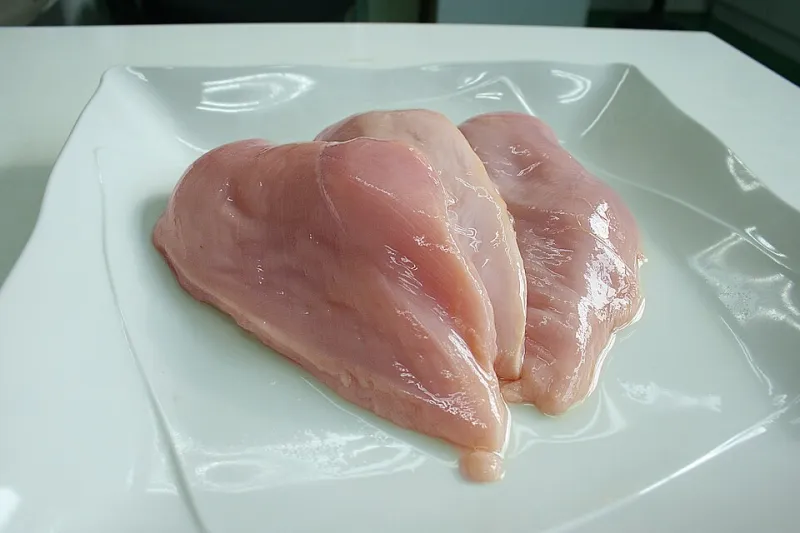
Photo: kakyusei, CC0, via Wikimedia Commons
There's a decent chance the chicken thigh you're planning to sear tonight has traveled further in the last week than you have. It may have crossed state lines twice, sat on a loading dock in the Georgia heat, and spent an hour on a pallet under the fluorescent hum of a distribution center before a refrigerated truck carried it the rest of the way.
Chefs have a name for the system that keeps protein cold from slaughter to sale: the cold chain. And when one link in that chain fails — a truck idling too long, a cooler door propped open, a pallet left on a warm dock — the chicken doesn't send a memo. It just quietly degrades until it lands in your cart looking perfectly innocent.
What the Cold Chain Actually Is
Think of it as a relay race where the baton is temperature. Processing: the bird is chilled down fast, usually to around 40°F or below. Transport: refrigerated trucks hold it there. Warehousing: more cold rooms. Store delivery: another truck. And finally, the retail case, where — and this is the part nobody tells you — the chain is at its most vulnerable.
Every time that temperature climbs and drops again, you get what food scientists call temperature abuse. It doesn't have to be dramatic. A half-hour on a warm dock won't necessarily make anyone sick, but it does two things you'll notice: it accelerates bacterial growth, and it damages the muscle tissue in ways that show up later as mushy texture and a shorter shelf life at home.
This is why the same brand of chicken can taste wildly different from one shopping trip to the next. You're not imagining it. You're tasting logistics.
Reading the Package Like a Line Cook
Professional kitchens don't take chicken on faith, and neither should you. A few things worth checking before it goes in your cart:
The sell-by date is a suggestion, not a guarantee. It's only meaningful if the cold chain held. A package three days from its sell-by date that's been handled perfectly will outperform a fresher package that's been abused. Date tells you time; your senses tell you condition.
Look at the liquid. A little purge — the pinkish liquid in the tray — is normal. A lot of it, especially cloudy or off-colored, means the muscle fibers have broken down and are dumping moisture. That's a texture problem waiting to happen. It'll steam instead of sear.
Feel the case, not just the package. The back of the display case, tucked under the overflow items, is usually the coldest spot. Front-row packages near the doors take the most thermal punishment every time a shopper opens the case. Grab from the back.
Trust your nose at home, not the store. Supermarket chicken is often packaged to smell neutral. Give it the sniff test when you unwrap it that evening. Sulfur, ammonia, or anything sour means it goes back — no recipe is worth it.
The Butcher Counter Tax Is Worth Paying
Here's my honest pitch for the ten extra minutes: the butcher counter is where the cold chain is shortest. That chicken breast was often broken down in-house, recently, and it's going into a paper wrapper instead of sitting under modified-atmosphere plastic for a week.
You also get a human being who can tell you what came in this morning. Ask. Butchers are, in my experience, delighted when someone cares. Ask what's freshest, ask for a specific thickness, ask them to butterfly that breast so it cooks evenly. That's service you cannot get from a sealed tray.
And the counter is usually cheaper per pound for the same quality, which feels like a glitch in the simulation but is just how retail margins work.
Your Car Ride Is Part of the Chain Too
The most common temperature abuse happens after checkout, and it's entirely on us. Chicken in a cart while you wander the aisles for twenty minutes, then in a warm trunk during a summer drive home — that's the broken link, and it's you.
Make the protein aisle your last stop. Bring an insulated bag in the trunk, even a cheap one. In July, in a parking lot in Texas or Florida or honestly anywhere south of Canada, that bag is the difference between chicken that sears beautifully tomorrow and chicken that smells like regret.
And once it's home? Unless you're cooking it within a day or two, freeze it. Your freezer stops the clock completely. Thaw it overnight in the fridge, not on the counter, and you've effectively reset the whole supply chain on your own terms.
The Takeaway
You can't fix a broken cold chain at the distribution center. But you can shop like someone who knows it exists: check the dates, read the liquid, grab from the back of the case, befriend your butcher, and never let raw protein ride in a hot trunk. Your sear marks — and your stomach — will thank you.


