Your Starter Isn't a Pet, It's a Coworker: The Real Rules of Living With a Sourdough Ferment
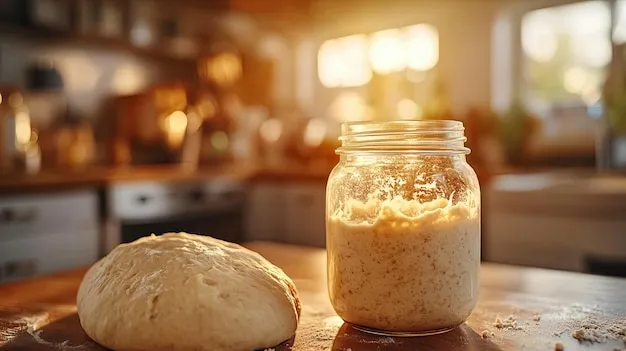
Photo: sourdough starter glass jar kitchen counter bubbling, via img.freepik.com
Somewhere in America right now, a mason jar labeled 'Bread Pitt' is sitting in the back of a fridge, neglected since March, and its owner feels genuinely bad about it.
We need to talk about that guilt, because it's built on a flawed metaphor. The internet has spent a decade telling you a sourdough starter is a pet. It needs love. It needs a name. It needs you.
No. A starter is a coworker. It shows up, does a job, and — here's the beautiful part — it doesn't care about you at all. It wants flour, water, and a reasonable schedule. That's it. Once you internalize the difference between a pet and a coworker, sourdough stops being an emotional commitment and starts being a kitchen system.
The Pet Trap Is Why Your Bread Fails
Pet thinking looks like this: feeding whenever you remember, panicking when the starter smells weird, tossing the whole jar because it developed a layer of liquid, and treating every hiccup like a veterinary emergency.
Coworker thinking looks like a schedule. In restaurant kitchens, nobody loves the levain — they maintain it, because the bread depends on it. Professional bakers run their starters on ratios and clocks, not feelings. That's the mindset shift that separates people who bake great sourdough every week from people who have a jar of regret in the fridge.
The Numbers That Actually Matter
Your starter care can be reduced to three numbers: 1:1:1, 1:2:2, and 1:5:5. These are flour, water, and starter ratios by weight, and choosing between them is about timing, not tradition.
- 1:1:1 (equal parts) — the standard daily feeding. If your starter peaks in 4-6 hours at room temp (roughly 70-75°F, which describes most US kitchens), this is your default.
- 1:2:2 — a slower build for cooler kitchens or when you want to sleep in. The extra food stretches fermentation out.
- 1:5:5 — the weekend warrior ratio. Feed once and you've got a big, slow-rising culture ready when you actually have time to bake.
Get a cheap kitchen scale. Volume measurements of flour vary by up to 20%, which means your 'consistent' feedings have been wildly inconsistent. This one purchase fixes more sourdough problems than any troubleshooting guide.
Fridge vs. Counter: Pick Based on Your Calendar, Not Your Vibes
Here's the schedule that fits a real American workweek:
Counter storage (feeds every 24 hours): Only worth it if you're baking three or more times a week. Otherwise you're dumping cups of flour into the trash via discard, which is both wasteful and annoying.
Fridge storage (feeds once a week): This is the 9-to-5 solution. Keep a small jar — 50 grams of starter is plenty — feed it Saturday morning, let it sit on the counter for two hours to get fermentation going, then park it in the fridge. Every Saturday, repeat. Pull it out Thursday night, feed it 1:5:5, and it's ready for a Saturday bake.
That's it. Two minutes of weekly maintenance. Your coworker clocks in, you clock in, nobody gets emotional about it.
The Revival Triage: Your Flowchart for a Neglected Jar
That gray liquid on top is hooch — alcohol from starving yeast — and it's a request for food, not a death certificate. Work through this in order:
- Smell it. Sour, boozy, vinegary? Fine. Fuzzy mold on top or a pink/orange tint? Compost it and start over. No shame.
- Stir, don't pour. Mix the hooch back in, feed 1:5:5 with warm water (about 80°F), and leave it on the counter.
- Give it 24 hours. A sluggish starter may not bubble on schedule. Feed again at 24 hours regardless of appearance.
- Repeat for 2-3 days. I've revived starters that looked like gray paste for 48 hours before roaring back. Yeast is stubborn in the best way.
- If it's alive but weak after a week of feedings, it's not dead — it's out of shape. Keep the discard, bake with it (discard crackers and pancakes are genuinely good), and the culture will regain strength.
The 40-Year Veterans Know Something
For this piece I talked to home bakers who've maintained starters for decades, and the pattern was unanimous: nobody successful treats theirs preciously. A retired teacher in Ohio keeps hers alive on a once-a-week fridge feed and has since the Carter administration. A guy in Portland told me his starter survived two cross-country moves in a checked bag.
Their secret, every time, was the same: low maintenance, consistent rhythm, zero drama. They also all kept a dried backup — spread a smear of starter on parchment, let it dry fully, and store it in an envelope. Reactivates in a few days of feedings. That's not pet care; that's a backup drive.
Drop the Name If You Want. Keep the Schedule.
If 'Doughy McFlourface' brings you joy, fine — I'm not the boss of your jar. But understand that the name does nothing. The ratio, the scale, and the weekly rhythm do everything.
Treat your starter like the coworker it is: give it a fair schedule, don't take its moods personally, and it will show up for you every single week. That's not a pet. That's the most reliable colleague in your kitchen.

