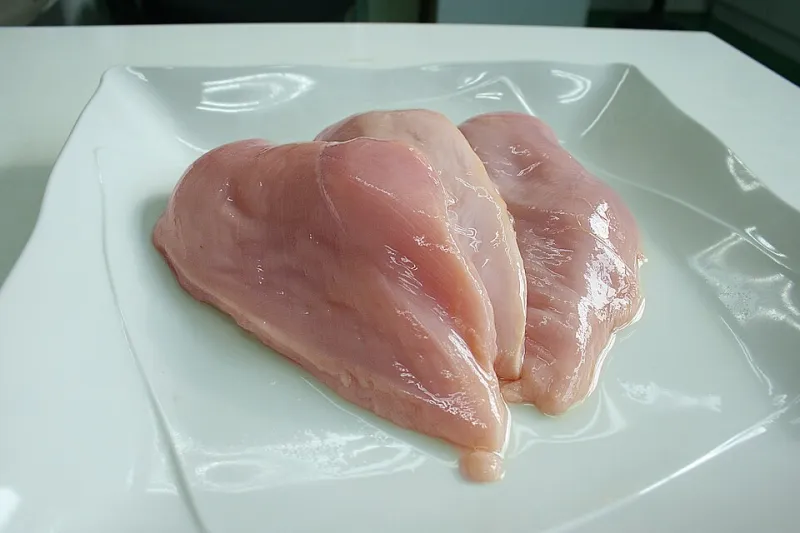
Your Freezer Should Be a Prep Station, Not a Time Capsule

Photo by Photo by Seb Reivers on Unsplash on Unsplash
Open the freezer in most American homes and you'll find a museum of good intentions. A bag of peas with freezer burn older than your kid. Half a banana bread wrapped in foil like it's evidence. That one frozen pizza, waiting.
In a professional kitchen, the freezer is none of those things. It's a workstation. Line cooks use it to firm up stock for skimming, to portion butter into pats, to hold par-baked potatoes, to make quenelles of ice cream ahead of service. The freezer isn't where food goes to die — it's where food gets ready.
The good news: you don't need a $4,000 blast chiller to steal these tricks. You just need to understand what's actually happening in there.
The Enemy Is Big, Slow Ice
Freezer burn and mushy leftovers aren't mysterious — they're the same problem wearing two outfits. When food freezes slowly, water molecules have time to clump into large, jagged ice crystals. Those crystals puncture cell walls. When the food thaws, the water leaks out and takes texture with it. That's your sad, weeping zucchini. That's the chicken breast that tastes like cardboard soaked in chicken-flavored sponge.
Fast freezing makes small crystals, and small crystals do far less damage. Commercial kitchens blast-chill food at -30°F or lower for exactly this reason. Your freezer sits around 0°F and freezes a warm container of soup at a glacial pace — which is why the soup you meant to eat "next week" emerges three months later as a grainy memory.
The Home Cook's Blast-Chill Toolkit
You can't match a blast chiller, but you can absolutely outsmart one. Three tricks:
Shallow and metal. Spread anything you're freezing in a shallow layer — a rimmed sheet pan, a metal baking dish. Metal conducts heat out fast, and shallow means the center freezes quickly. Once it's solid, transfer to a bag or container. Never freeze a warm quart of chili in a deep plastic tub unless your goal is disappointment.
The ice bath before the ice box. Chill hot food in an ice-water bath (set the pot in a bigger bowl or sink of ice water, stir occasionally) until it's cool to the touch. Twenty minutes here saves hours of slow freezing and cuts your crystal problem in half.
Cold spots and airflow. Freeze items on the top shelf or against the back wall, where the air is coldest, with space around them. A freezer packed to the gills freezes slowly at the edges. (Once things are frozen solid, though, pack it full — a full freezer holds temperature better during a power outage.)
What Freezes Like a Champion (and What Never Will)
Some foods are practically engineered for the freezer. Others are a trap. Know the difference:
Freezes beautifully: stocks and braises, chili, bolognese, cooked beans and grains, cookie dough (portion it first), raw bacon and sausage, peeled ginger, tomato paste (in a zip bag, flattened, snapped into pieces), butter, nuts, bread, and — this one surprises people — hard cheeses. Grate a block of Parmesan, freeze it, and it sprinkles straight from frozen.
Freezes fine with one step: fruit destined for smoothies (freeze on a sheet pan first so it doesn't fuse into one boulder), shredded chicken in broth (the broth protects it), pesto with a film of olive oil on top, and browned ground meat.
Never bother: raw cucumber, lettuce, whole tomatoes, cooked potatoes in anything (they turn gritty), mayonnaise-based anything, hard-boiled eggs, and cream sauces, which break into a grainy, curdled mess. Cream-based soups can survive if you freeze them before adding the dairy and stir in fresh cream at the reheat.
The Freezer as Mise en Place
Here's the mindset shift that separates prep from storage-of-last-resort: freeze food at its peak, in ready-to-use form, on purpose.
- Portion ground meat into flat, stackable zip bags pressed thin — they thaw in twenty minutes in cold water.
- Freeze stock in silicone muffin tins, then pop the pucks into a bag. One puck equals about half a cup, perfect for deglazing a pan sauce.
- Blitz herbs with oil and freeze in ice cube trays. Drop a cube into a hot pan in February and you've got August on the stove.
- Wrap dough in logs and slice cookies straight from frozen — no thawing, no planning, no excuse.
Notice the pattern? Everything goes in labeled, dated, and portioned for a specific future meal. A freezer full of deliberate components is a head start. A freezer full of unlabeled mystery tubs is a guilt museum.
Thaw Like You Meant It
All this effort dies at the thaw if you do it wrong. The safe, fast method is cold running water in a sealed bag — a pound of meat thaws in under an hour. The refrigerator works overnight for anything planned. What you should never do is thaw on the counter, where the surface of the food sits in the danger zone for hours while the middle's still frozen. And skip the microwave for anything you care about; it partially cooks the edges before the center softens.
One exception worth knowing: thin cuts, small shrimp, and most fruits and vegetables can go straight from frozen to heat. Frozen shrimp sautéed from frozen are actually better — they never sit around weeping.
Your Assignment
This week, do one thing: pull everything out of your freezer, toss what's past saving, and reorganize what's left by meal, not by accident. Then, next time you make stock or a pot of chili, freeze half in portions on purpose — shallow, labeled, dated.
That's the whole philosophy. Restaurants don't freeze food because they're lazy; they freeze it because they're organized. Steal that. Your weeknight self will thank you.