I Bought the Cheapest Steaks at Kroger and Cooked Them Five Ways. My Friends Couldn't Tell Which Was Which.

Photo by Photo by Ryoji Hayasaka on Unsplash on Unsplash
Let's be honest about how most of us buy steak. We stand in front of the meat case, wince at the price of ribeye, grab whatever is on manager's special, and then go home and cook it exactly the same way we always do. Then we complain it was tough.
That's backwards. The cut is the ingredient. The technique is the meal. And last month I set out to prove it with the least glamorous steaks I could find: four sirloins from my local Kroger, each around $12, each choice grade, each about an inch and a quarter thick.
The Setup: Five Steaks, Five Treatments, Zero Mercy
I invited three friends over, cooked five steaks (I bought a fifth for a control group), sliced them blind, and had everyone rate each one on crust, tenderness, and overall flavor. Nobody knew which steak was which. Nobody knew I'd spent less than $70 on the whole experiment.
Here's what each steak got:
- The control. Salted five minutes before hitting a screaming hot cast iron pan. The way most of us actually cook.
- The dry-brined classic. Salted the night before, left uncovered in the fridge, seared hot and fast with a butter baste at the end.
- The reverse sear. Salted overnight, slow-roasted at 250°F until the internal temp hit 115°F, rested, then blasted in cast iron for a crust.
- The reverse sear plus butter baste. Same as above, but finished with butter, smashed garlic, and thyme.
- The marinade apology. Soaked overnight in a soy-garlic marinade, then seared. The "maybe I can flavor my way out of a cheap cut" approach.
What the Room Said
The control steak — salted five minutes out, cooked the way most Americans cook on a Tuesday — came in dead last. Chewy crust, gray band around the edge, juice pooling all over the cutting board. My friend Dana described it as "steak-flavored homework."
The marinade steak did better but landed in the middle. The soy brought salt and a little browning, but the surface never developed a real crust, and the interior tasted, well, marinated rather than beefy.
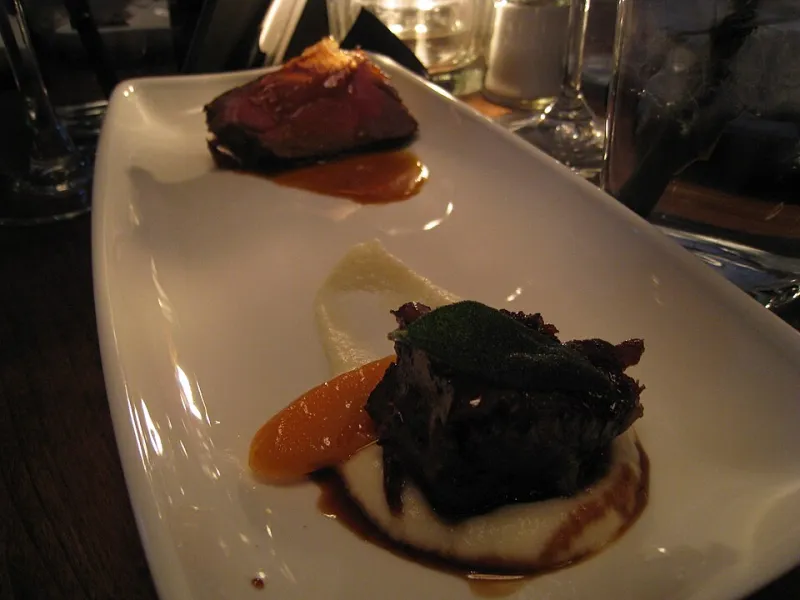
The two reverse sears tied for the top spot, with the butter-basted version edging ahead on flavor. Here's the part that surprised even me: Dana — the same Dana — picked the winner and said, "That's the expensive one, right? That's at least a $28 steak."
It was $11.94.
Why Dry-Brining Is the Cheapest Upgrade in Your Kitchen
If you take one thing from this article, take this: salt your steak the night before.
Salt needs time to work. Applied minutes before cooking, it draws moisture to the surface through osmosis, and that moisture steams your steak instead of searing it. Applied 12 to 24 hours ahead, that moisture gets reabsorbed — salt and all — deep into the muscle. You get seasoned meat all the way through instead of a salty crust over a bland center.
The mechanics are simple:
- Pat the steak dry with paper towels
- Salt generously on all sides — about a teaspoon of kosher salt per pound
- Set it on a wire rack over a sheet pan (the rack matters; a flat surface traps moisture underneath)
- Leave it uncovered in the fridge overnight
The fridge's dry air also wicks surface moisture away, which is exactly what you want for a hard sear. A wet steak browns. A dry steak crusts.
Reverse Sear: The Technique That Forgives Cheap Meat
Choice-grade sirloin has less marbling than prime ribeye, which means less internal lubrication and a narrower window between "perfect" and "overcooked." The reverse sear widens that window dramatically.
By bringing the steak up to temperature gently in a 250°F oven, you get edge-to-edge even cooking — no gray, overcooked band hugging the crust. Then the final sear is short and violent, building a crust before the interior has time to climb past medium-rare.
The full method:
- Dry-brine overnight (see above)
- Roast at 250°F until the internal temperature reads 115°F for medium-rare — about 25 to 35 minutes for a 1.25-inch steak, but trust the thermometer, not the clock
- Rest 10 minutes while you preheat your cast iron until it's smoking lightly
- Sear 60 to 90 seconds per side
- In the last minute, add butter, a smashed clove of garlic, and a sprig of thyme, and spoon the foaming butter over the steak
That last step — the butter baste — is doing more than adding flavor. The milk solids in the butter brown rapidly and baste the steak in toasty, nutty compounds, the same reason restaurant steaks taste like restaurant steaks. It costs about 40 cents and it's the difference between a good steak and a memorable one.
Three Cheap-Steak Rules Worth Tattooing Somewhere
Rule one: buy by thickness, not by name. A thin steak is nearly impossible to cook to a proper medium-rare with a real crust. If the case only has thin-cut sirloin, ask the butcher at the counter to cut you something thicker. Most supermarkets will, and it costs the same per pound.
Rule two: thermometers beat folklore. The "cook it 4 minutes a side" advice on the package assumes a steak you don't have, on a stove you don't own. A $15 instant-read thermometer is the single highest-leverage purchase in home cooking.
Rule three: rest it, then slice it against the grain. Five to ten minutes of rest keeps the juices in the meat. Slicing against the grain shortens the muscle fibers your teeth have to deal with — on a lean cut like sirloin, this alone improves tenderness noticeably.
The Verdict
Total experiment cost: about $70 for five steaks, plus butter and salt I already owned. The winning technique — overnight dry brine, reverse sear, butter baste — turned a $12 supermarket sirloin into something my guests priced at nearly double.
Technique beat price tag. It wasn't close. And unlike a raise, a technique is free once you've learned it.
So next time you're standing at the meat case wincing, don't. Grab the cheap one. You know things now.